
Campaigns control every aspect of any call routed through the platform.
From inside a campaign, you can install call tracking tags, configure payout settings, manage your call routing and set up URL parameters and campaign pixels.
This article contains the following sections:
- Campaigns List Screen
- Campaigns Detail Screen
- Campaign Settings Tab
- Create a Campaign
-
- Can publishers see the campaign routing plan?
- Can my publisher use a SIP endpoint for their Ringba DID?
- Can my publisher send call data in their SIP headers?
- If I add a local number to a publisher on my campaign, how does the system decide which area code to use?
- How should I set the Target Dial Attempts field to avoid annoying buyers?
- What should I do if I need help with my campaigns?
Campaigns List Screen
You navigate to the Campaigns screen by clicking Campaigns in the left navigation bar. You can use the search bar at the top of the screen to search for campaigns by name or ID. Use the drop-down next to the search field to filter the results by status: Live, Paused, Setup, or All.
A table appears with a row for each campaign in your account.
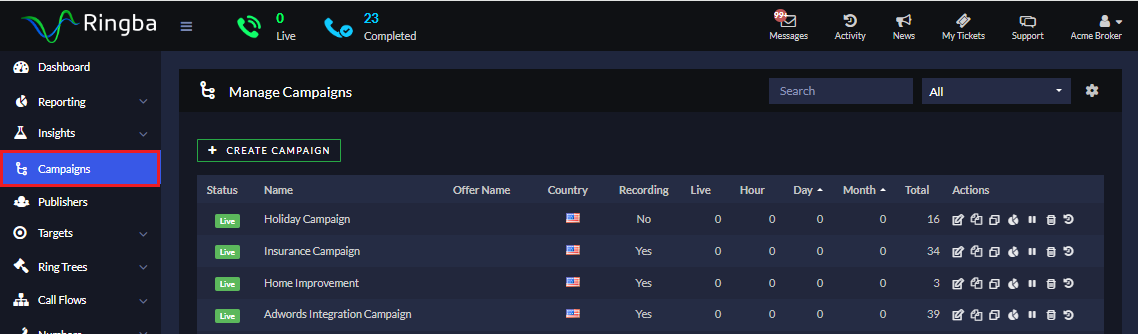
You can control which columns appear in the table by clicking the gear icon to the right of the search. The table can contain the following columns:
- ID: The campaign's unique identifier. This value never changes for the campaign even if you change the name or other configurations.
- Status: The status of the campaign. Valid values are Live, Setup, and Paused.
- Name: The name of the campaign.
- Offer Name: The name of the offer related to this campaign, if applicable.
- Country: The flag of the country where this campaign operates. Hover over the flag to see the country code.
- Recording: Yes or No to indicate whether this campaign records calls.
- Live: The number of calls to this campaign that are currently connected to a target.
- Hour: The number of converted calls to this campaign in the last 60 minutes.
- Day: The number of converted calls to this campaign today.
- Month: The number of converted calls to this campaign this month.
- Total: The total number of converted calls to this campaign since it was created.
- Actions: Icons you use to perform actions on a campaign. See the next section for details.
You can click most of the column headers to sort the campaigns by the value in that field. Click the header again to reverse the sort, and click it a third time to remove the sort. You can use the icons in the Actions column to perform other operations on campaigns from the list screen.
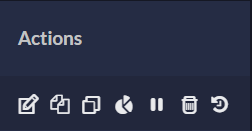
Click the icons in the Actions column to:
- Edit Campaign: Open the campaign's configuration details for editing.
- Duplicate Campaign: Create a copy of this campaign.
- Copy Campaign ID: Copy the campaign ID to your computer's clipboard.
- View Reports: Open the Reporting screen filtered to only information about this campaign.
- Pause Campaign: Temporarily stop calls to this campaign. Ringba blocks calls that come in to the campaign's numbers and increments the number in the Blocked column of the Summary report. Also, JavaScript snippets that show number-pool numbers for this campaign on your landing page return 404 errors while a campaign is paused.
- Delete Campaign: Delete the campaign from your account.
- View Activity: See a history of recent changes to this campaign.
Campaigns Detail Screen
From the list screen, you can click the Create Campaign button or click the name of a existing campaign from the list to open it and see the detail view.
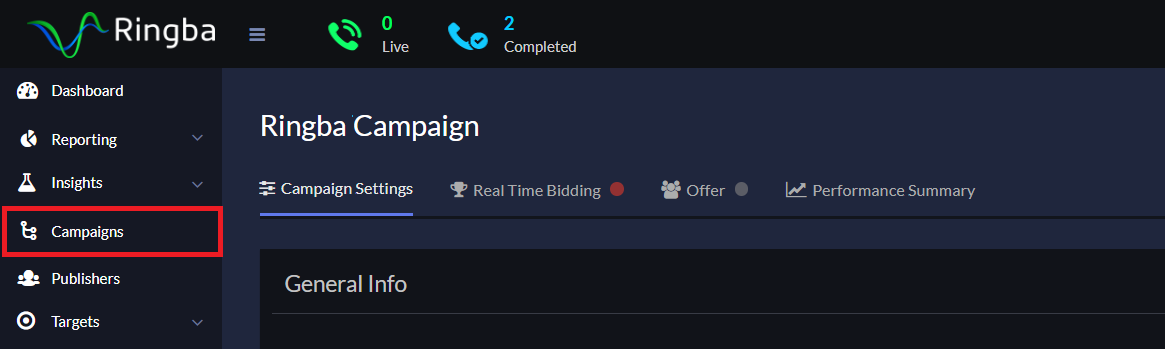
When you open a campaign, tabs appear at the top of the screen:
- Campaign Settings: Use this tab to configure the campaign. See the section later in this article for information on the settings you configure on this tab.
- Real Time Bidding: Use this tab to enable real-time bidding (RTB). Once you toggle on the switch, the fields to configure RTB appear.
- Offer: Use this tab to set up an offer to present the campaign to your publishers.
- Performance Summary: Use this tab to see how the campaign has performed over the last week. Select data points from the table to see them graphed over time. If the campaign uses RTB, you can scroll down to the Real-Time Bidding section of the screen to export bids, see an RTB breakdown by publisher, and an RTB rejection breakdown from this tab.
Note: The data in the Performance Summary graph and table on this tab is the same as the data in the Performance Summary graph and table on the dashboard. The difference is that the dashboard shows the data for your entire account, while this tab shows the data specific to the campaign.
Campaign Settings Tab
The Campaign Settings tab is where you configure the primary settings for the campaign. This tab contains several sections, described below.
General Info
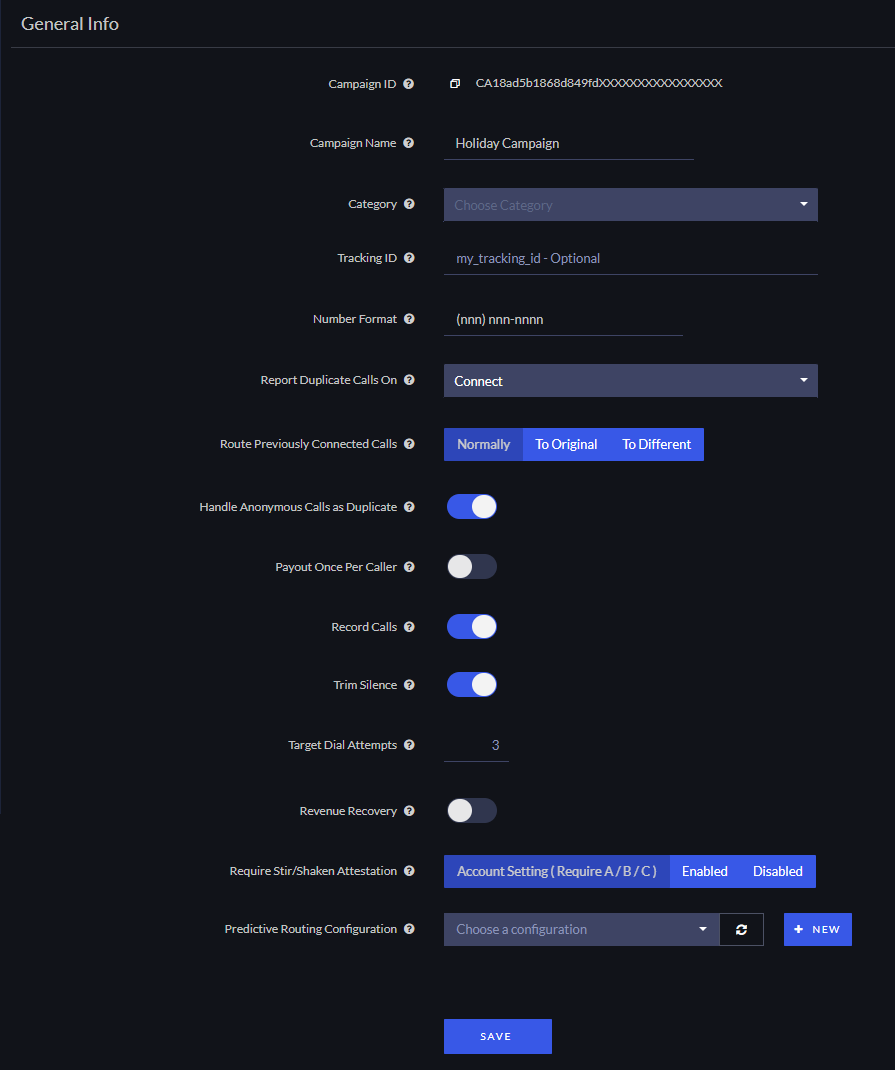
The campaign's basic settings including Campaign Name, Category, and Tracking ID. If you are using the Advanced Number Pool Number display solution, you set the Number Format here. Other fields offer settings for:
- Reporting, routing, and payouts for duplicate calls (call from the same caller ID as a previous call)
- Managing anonymous calls
- Recording calls and managing the recordings
- Automatically transcribing calls, including setting a minimum recording time before transcribing and a maximum amount of recording time to transcribe
- Controlling how many times your account attempts to dial a target
In this section you can enable revenue recovery, require stir/shaken attestation, and add a predictive routing configuration.
TCPA Shield
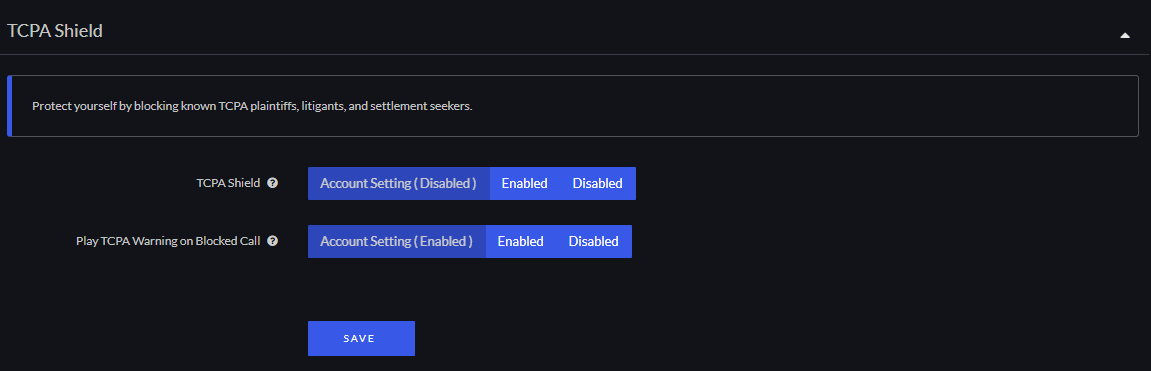
Use the controls in this section to enable TCPA Shield, a tool to protect you from professional litigators. You can use this section to enable, disable, or use the account settings for TCPA Shield on this campaign. If you enable TCPA Shield, you can also choose whether to play a "This call has been blocked" message to blocked callers before the calls ends.
Important: Fees apply if you enable TCPA. TCPA is a paid feature that is charged per scrub, so if you are using real-time bidding (RTB) the same call may result in multiple charges. The charges are non-refundable, even if the call doesn't occur. Please reach out to your manager about its costs.
Spam Filter
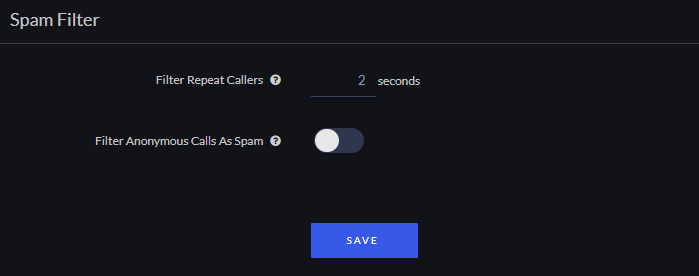
Use the controls in this section to configure how many seconds must pass between calls from the same caller ID. By default, the campaign configuration rejects duplicate calls from the same caller ID within two seconds and automatically blocks anonymous callers.
Ringba blocks subsequent calls from caller ID that called more recently than the number of seconds you enter in the Filter Repeat Callers field. If you toggle on the Filter Anonymous Calls as Spam switch, Ringba also blocks calls from anonymous numbers. You can see the number of blocked spam calls in the Blocked field on the Summary report.
Default Payout Settings
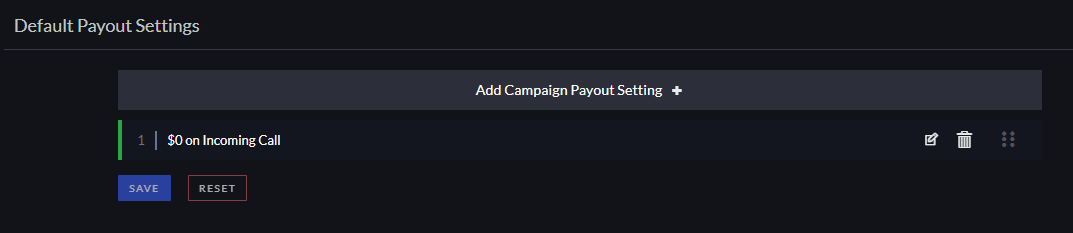
This section is where you configure how to track all the Payouts for calls sent to the campaign. Campaigns have the ability to track payouts as a Fixed Amount or a Revshare Percentage. Campaign-level payout settings can be overridden per publisher.
Publishers
Use this section to add tracking numbers and number pools to a campaign for you or a publisher.
Call Tracking Tags
Use the controls in this section to create a call tracking tags for this campaign. Installing call tracking tags on landing pages tracks calls using number pools. Number pools work by placing the Ringba JavaScript tag on your landing pages to display unique phone numbers to every user and attributing detailed information about the source of the user.
Platform Integration
Add Facebook Call Only Ads or Google Ads integrations on your campaign to fire conversions back to these platforms.
Call Routing
The type of call routing configuration the campaign uses:
- Standard routing uses targets and groups to route calls based on priority and weight.
-
Predictive Routing automatically routes your calls to your best-performing buyer by calculating an estimated revenue per call for each buyer. See Predictive Routing for more information.
Note: If you choose the Predictive tab, make sure you choose a Predictive Routing Configuration in the General Info section at the top of this screen. If you don't choose a configuration, Ringba uses target revenue and revenue from ring trees to perform routing calculations. -
Call Flow routing sends calls to a call flow that uses nodes and caller prompts to route calls.
Note: Call flows are not compatible with real-time bidding.
Note: The tool you use to configure Standard or Predictive Routing is the same kind of tool you see when you set up a standalone routing plan. See the Routing Plans article for help using this tool.
Note: If you add a call flow here, the Record Calls switch you configured at the top of the screen changes when you save the campaign. It becomes a selector set to Use Call Flow Settings by default. If you want to override the call flow settings, you can revisit that field after saving the campaign.
Strike Price Schedule
Use this section to configure a strike price schedule. The strike price schedule lets you set a price threshold for each hour of the week. During bid collection, Ringba ends the auction immediately and declares a winner if it receives a bid that meets or exceeds that hour's strike price. It does not wait on the remaining ring tree targets (RTTs) to respond.
Strike price applies to priority routing, predictive routing, and Real Time Bidding (RTB) bid-request-time resolution, so it can end bid collection early no matter which routing method the campaign uses.
See Strike Price for full details.
URL Parameters
Use this section to define URL parameters for this campaign. URL parameters let you pass information directly into Ringba for reporting and integration with other platforms.
Tracking Pixels
Use this section to define tracking pixels for this campaign. Tracking pixels let you pass information directly from Ringba to other software platforms.
Shareable Tags
Use the controls in this section to configure shareable tags for this campaign. These controls enable sharing the Inbound Call ID and select tags to share with other Ringba accounts.
Create a Campaign
Use the following steps to create a campaign:
-
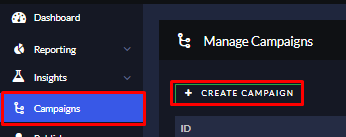
Click Campaigns from the left navigation panel to open the Campaigns list page. Click the Create Campaign button.
-
Enter your Campaign Name and choose the Country where you would like to accept phone calls.
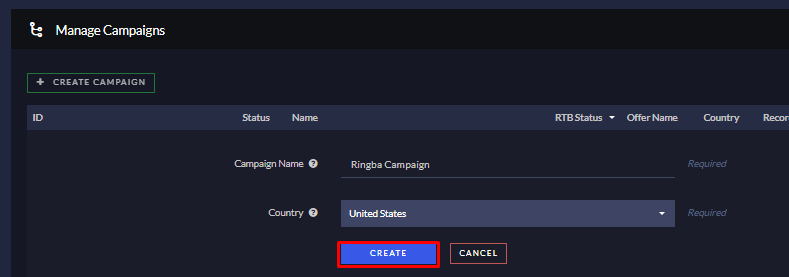
Note: You can select any country from the drop-down list, but you must contact Ringba Support to buy numbers for any country other than the United States or Canada. -
Set up the General Settings for your campaign as desired.
-
Set up the TCPA Shield settings if you want to use TCPA shield.
-
Set up the Spam Filter settings.
-
Complete the Default Payout Settings section. Click Add Campaign Payout Settings to show more fields to configure the payout settings.
-
Add a publisher in the Publishers section. Create or add a unique tracking number where you or your partners can send calls or use for advertising. To add a publisher, click the Add Publisher button. Then select the desired publisher and create a new number or add an existing one to the selected publisher.
Note: If you want to create a new publisher, go to the Publishers page and click the Add Publisher button. Once you have created the new publisher, its name appears in the dropdown menu in the Publishers section of the campaign.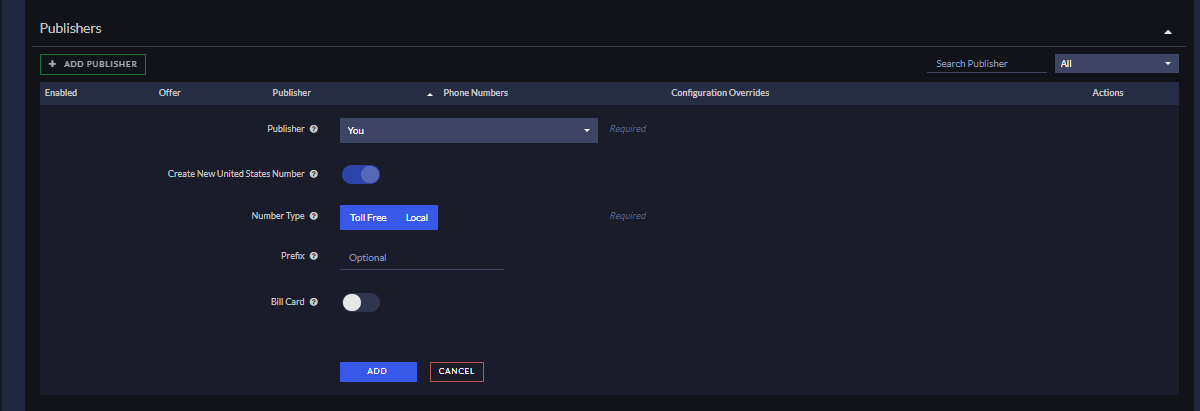
-
Complete the Call Tracking Tags section. Click the Add Call Tracking Tag button to show the fields to configure a call tracking tag. Enter phone numbers in E.164 format.

-
Complete the Platform Integration section if you want to integrate this campaign with Facebook Call Only Ads or Google Ads integrations. Click the Add Integration button to show the fields to configure the integration.

-
Add a target in the Call Routing section. Forward your calls to buyers, call centers, or anywhere you'd like them to go. To add a target, search for the desired target and click the arrow icon under the Actions column to add it to the Routing Plan.

Note: To create a new target, go to the Targets > Manage Targets page and click on the Create Target button. Once you have created the new target, its name appears under the Call Routing. -
Complete the URL Parameters section if you want to use URL parameters. Click the Add URL Parameter button to show the fields to configure the URL parameter.

-
Complete the Tracking Pixels section as desired. Click the Add Pixel button to show the fields to configure the tracking pixel.

- Send a test call to your tracking number to see Ringba operating in real-time.
Campaign Management FAQ
Can publishers see the campaign routing plan?
No. The routing plan is hidden from the view publisher users see.
Can my publisher use a SIP endpoint for their Ringba DID?
Your publishers can SIP forward calls in Ringba, and they can include call data in the SIP headers.
If your publisher sends calls from a system that requires a SIP endpoint, they can use this pattern to access your number as a SIP endpoint:
<number>@qeCpRfegq5Kefhp.sip.telnyx.comReplace <number> with your number, including the country code but no plus sign. For example, if your number is 1-555-111-2222, the SIP endpoint would be
15551112222@qeCpRfegq5Kefhp.sip.telnyx.comImportant: The SIP endpoint is case-sensitive, so you must maintain the capitalization in the pattern above.
Can my publisher send call data in their SIP headers?
Yes! If your publisher sends calls via SIP and includes data in the SIP headers, Ringba automatically captures that information and adds it to the call as tags. You can see the tags on the Call Details report and use the tags for tag routing filters. See Reporting Tags for more information.
If I add a local number to a publisher on my campaign, how does the system decide which area code to use?
When you add a publisher in the Publishers section of your campaign and then create a new number for that publisher, you choose whether the number is Toll Free or Local. In this case, "local" simply means the number is not toll-free; it does not guarantee the number will have the same area code as the caller.
When you select Local, a field appears where you enter the area code you want to use for the local phone number. If you leave this field blank, Ringba selects one at random.
How should I set the Target Dial Attempts field to avoid annoying buyers?
Controlling the number of pings you receive and send is important, especially if you are using services that charge on a per-ping basis.
However, the value you enter in the Target Dial Attempts field applies only when you are dialing a single target directly. Ringba uses this value if the target does not answer the call, such as because all agents are busy. Ringba waits the amount of time in the Connection Timeout field on the target, then tries again.
If the target still doesn't answer, Ringba repeats this for the number of times you enter in the Target Dial Attempts field. The buyer is unlikely to be annoyed by any number of attempts because they are unaware of the number of times you receive a busy signal.
Most users do not directly dial a single target anymore. Ring tree targets open up more options in case your target does not answer, and real-time bidding adds even more sophistication. If you use either of these solutions, Ringba ignores the value you enter in the Target Dial Attempts field.
What should I do if I need help with my campaigns?
If you have any questions or need additional help, please reach out to our support team via chat or email at support@ringba.com.